

alarm RGCIRC, Niti Bagh alarm Emergency - 24/7 Book an Appointment Find a Doctor

RGCIRC Team

Cancer

22 September, 2026

Mesothelioma is a rare but highly aggressive cancer. Despite advances in systemic treatment, long term survival remains limited, making early recognition, multidisciplinary care and prevention of asbestos exposure particularly important.

Observed every year on 26 September, Mesothelioma Awareness Day gives individuals, workplaces, healthcare organisations and communities an opportunity to learn about the disease and recognise its connection with asbestos exposure.

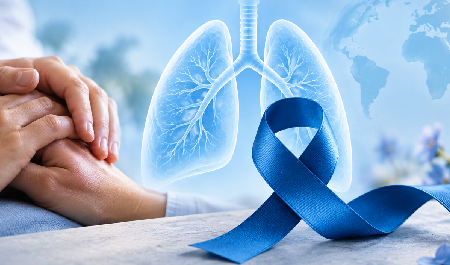
There is no formally announced theme for Mesothelioma Awareness Day 2026. However, “Paint the World Blue” — the central awareness initiative associated with the day — captures its spirit: use the colour blue to start conversations and turn a single day of visibility into year-round understanding.

What is Mesothelioma Awareness Day?

Mesothelioma Awareness Day was established in 2004 by members of the Mesothelioma Applied Research Foundation community to draw greater attention and research funding to this rare cancer. As mesothelioma affects a comparatively small number of people, awareness and research have historically received far less attention than more common cancers.

The observance creates a shared platform for patients, survivors, caregivers, healthcare professionals, researchers and advocates to call for better understanding, earlier evaluation and continued scientific progress. It also gives affected individuals a chance to be seen as more than a diagnosis. Patient stories can challenge the misconception that mesothelioma affects only one type of person, or that every patient’s experience and outcome will be the same.

Mesothelioma Awareness Day 2026 Theme

While no official theme for Mesothelioma Awareness Day 2026 had been announced yet, “Paint the World Blue” is widely recognised as the principal campaign connected with the day.

The idea is simple: wear blue, illuminate buildings and landmarks in blue or share blue-themed photographs to start conversations about mesothelioma. The colour becomes a visible prompt for people to ask what the campaign represents and learn about the disease.

For 2026, the initiative carries a broader message: bring mesothelioma out of the shadows. Painting the world blue is not simply a symbolic act. It can be used to recognise patients, remember those lost to the disease, and emphasise the need for asbestos awareness, specialist care and further research.

What is Mesothelioma?

Mesothelioma is a cancer that develops in the mesothelium, a thin layer of tissue that covers and lines several internal organs. It is distinct from lung cancer, although its most common form develops in the lining around the lungs.

The principal types are classified based on site of cancer origin:

  • Pleural mesothelioma: Develops in the pleura, the tissue surrounding the lungs. It is the most common form.
  • Peritoneal mesothelioma: Begins in the peritoneum, which lines the abdominal cavity and covers many abdominal organs.
  • Pericardial mesothelioma: Affects the tissue surrounding the heart and is extremely rare.
  • Testicular mesothelioma: Develops in the lining around the testes and is also extremely rare.

Microscopically, mesothelioma is also classified as epithelioid (most common and generally more responsive to treatment), sarcomatoid, and biphasic (a mix of both).

Mesothelioma Risk Factors:

Primary Cause: Asbestos Exposure

The leading cause of mesothelioma is exposure to asbestos, a naturally occurring mineral widely used in construction, shipbuilding, manufacturing, and insulation materials.

When asbestos fibres are inhaled or ingested, they can lodge in the mesothelium, causing chronic inflammation and cellular damage over time. This can lead to the development of mesothelioma decades after the initial exposure. Beyond mesothelioma, exposure can cause cancers of the lung, larynx and ovary, as well as asbestosis (chronic scarring of the lungs).

Additional Risk Factors

Apart from asbestos exposure, several other factors may contribute to an increased risk of developing mesothelioma.

  • Zeolite Exposure – Certain minerals, such as erionite (a type of zeolite), have asbestos-like properties and have been linked to mesothelioma cases.
  • Radiation Exposure – Individuals who have undergone radiation therapy for previous cancers may have a slightly increased risk of developing mesothelioma later in life.

Who is at Higher Risk?

Although mesothelioma can affect anyone, certain groups are more vulnerable due to occupational, environmental or lifestyle factors:

  • Industrial workers, miners and construction professionals frequently exposed to asbestos
  • Individuals living near asbestos mines or manufacturing plants
  • Family members of asbestos-exposed workers due to secondary exposure.
  • People with a history of long-term asbestos exposure, even if symptoms appear decades later

Why Mesothelioma Can Take Decades to Appear

One of the most important facts highlighted on Mesothelioma Awareness Day is that asbestos-related illness may not become apparent soon after exposure. Mesothelioma has a long latency period and symptoms may emerge several decades after asbestos fibres first entered the body. The National Cancer Institute notes that asbestos-related conditions can take approximately 10 to 40 years or longer, to produce symptoms. An occupational and environmental history is very important during medical assessment. Patients should tell their doctors about known or possible past exposure, even if it happened decades ago.

Possible Symptoms of Mesothelioma:

Symptoms depend partly on where the cancer develops and can overlap with many non-cancerous conditions.

Symptoms of Pleural Mesothelioma

  • Shortness of breath
  • Persistent cough
  • Pain in the chest or beneath the ribs
  • Unexplained fatigue
  • Unintentional weight loss

Fluid may accumulate between the layers of tissue surrounding the lungs. This condition, known as pleural effusion, can cause breathing difficulty and chest discomfort.

Symptoms of Peritoneal Mesothelioma

  • Abdominal pain or swelling
  • A feeling of fullness
  • Increasing abdominal size
  • Changes in bowel habits, including constipation
  • Unintentional weight loss
  • Fatigue

Symptoms of Pericardial Mesothelioma (Heart)

  • Chest pain
  • Irregular heartbeat (arrhythmia)
  • Shortness of breath (caused by fluid accumulation around the heart)
  • Low blood pressure

Symptoms of Testicular Mesothelioma (Testes)

  • Swelling or lumps in the scrotum
  • Testicular pain

How is Mesothelioma Diagnosed?

Diagnosis usually begins with a medical history and physical examination. The doctor may ask about previous jobs, military service, building renovation, family members’ occupations and homes located near industrial sources. Even an exposure that appears remote may be relevant.

Depending on the symptoms and suspected location, doctors may recommend:

  • A physical examination and detailed medical history
  • A chest X-ray or another initial imaging test
  • CT, MRI or PET scans to examine suspicious areas
  • Tests on fluid collected from the chest or abdomen
  • A biopsy to obtain a tissue sample
  • Laboratory examination of the tissue, including specialised staining, to confirm the cancer type

Imaging can reveal abnormalities, but a biopsy is generally essential for confirming mesothelioma and distinguishing it from other cancers. Specialists may also perform further tests to determine the extent of the disease and to support treatment planning.

How is Mesothelioma Treated?

There is no single treatment plan for every person with mesothelioma. Treatment planning may depend on several factors such as site of cancer origin, stage of cancer, whether it can be removed surgically, patient’s comorbidities, patient’s preferences and treatment goals

Depending on the case, treatment may involve one or more of the following approaches.

Surgery

Selected patients with localised disease may be considered for an operation intended to remove as much of the visible tumour as possible. Major surgery is not suitable for everyone and should be considered carefully at a centre with relevant experience.

Systemic Therapy

Chemotherapy and immunotherapy can target cancer cells throughout the body. For many years, chemotherapy remained the mainstay of systemic treatment. Recently, combining immunotherapy with chemotherapy has emerged as a first-line option for selected patients. The specific treatment or combination depends on the type and stage of mesothelioma, previous treatment and the individual’s overall health, and is decided after specialist evaluation.

Radiotherapy

Radiotherapy may be used in selected circumstances, including pain control. In some cases, it may form part of a broader treatment strategy involving different therapies.

Supportive and Palliative Care

Pain management, breathing support, nutritional advice, rehabilitation and emotional care can improve comfort and quality of life.

Treatment guidelines for mesothelioma have been updated in recent years to reflect a more individualised approach tailoring the role of surgery, integrating immunotherapy, and recognising the value of molecular and pathological testing.

Common Misconceptions About Mesothelioma

Mesothelioma Awareness Day provides an opportunity to correct several persistent misconceptions.

MYTH: Mesothelioma is the same as lung cancer.

Mesothelioma usually begins in the lining around the lungs, whereas lung cancer begins in lung tissue. They are distinct diseases requiring different approaches.

MYTH: It affects only elderly industrial workers.

Occupational exposure has played a major role, and long latency period means many patients are diagnosed later in life. However, mesothelioma can affect people from different backgrounds and age groups.

MYTH: A person would become ill immediately after asbestos exposure.

The disease commonly develops many years or decades later.

MYTH: Brief exposure can always be considered harmless.

Risk generally increases with heavier and longer exposure, but there is no simple exposure history that can independently determine whether someone will develop an asbestos-related disease.

MYTH: Every person with mesothelioma has the same outcome.

Outcomes vary according to disease type, stage, tumour biology, general health and response to treatment.

How to Observe Mesothelioma Awareness Day 2026

Individuals and organisations can mark the day in practical and meaningful ways:

  1. Wear blue: Invite family members, friends or colleagues to wear blue on 26 September and explain why.
  2. Paint the World Blue: Use blue lighting or decorations at home, in the workplace or at an event, provided it can be done safely and with permission.
  3. Share verified information: Post a concise explanation of mesothelioma, its link with asbestos and the importance of medical evaluation.
  4. Tell a personal story: Patients, survivors and caregivers who feel comfortable doing so can share their experiences. Consent and privacy should always come first.
  5. Organise an educational session: Hospitals and workplaces can invite an oncologist, respiratory specialist or occupational-health professional to discuss asbestos-related disease.
  6. Recognise caregivers: A diagnosis affects partners, relatives and friends as well as patients. A message of appreciation can acknowledge the practical and emotional support they provide.
  7. Support credible organisations: Donations or fundraising activities can help organisations involved in patient assistance, education and mesothelioma research.

Awareness messaging should be accurate, sensitive and centred on people. Avoid portraying every diagnosis as hopeless or reducing patients to exposure histories and survival statistics. At the same time, communication should not make unproven claims about cures, screening tests or alternative treatments.

Social-media posts should draw on dependable medical sources and encourage people with concerning symptoms to consult qualified healthcare professionals. Responsible awareness communicates seriousness without creating panic, and hope without offering false reassurance.

Moving from Visibility to Meaningful Action

Mesothelioma Awareness Day 2026 is a reminder that rarity should not lead to invisibility. Although mesothelioma affects fewer people than many other cancers, every delayed diagnosis, unanswered question and family seeking support matters.

By painting the world blue on 26 September, people can help make this rare cancer visible. But the meaning of the campaign extends beyond wearing a colour. It lies in understanding asbestos-related risks, listening to patients and caregivers, encouraging timely medical attention and supporting the research needed to improve care.

A single day cannot resolve every challenge surrounding mesothelioma. It can, however, begin conversations that continue throughout the year and ensure that those affected by the disease are recognised, informed and supported.

Expert Mesothelioma Care at RGCIRC

At the Rajiv Gandhi Cancer Institute & Research Centre (RGCIRC), patients with suspected or confirmed mesothelioma can access multidisciplinary cancer care supported by thoracic oncology, medical oncology, radiation oncology, radiology, pathology and supportive-care specialists. Treatment is planned according to the type and extent of disease, the patient’s overall health and individual care goals.

Our approach combines specialist expertise, clinical excellence and empathy, with support extending from diagnosis and treatment planning to symptom management, rehabilitation and palliative care when needed.

To consult a cancer specialist at RGCIRC:☎ tel:+91-11-47022222 Visit www.rgcirc.org

Frequently Asked Questions

When is Mesothelioma Awareness Day 2026?

Mesothelioma Awareness Day is observed every year on 26 September. The day raises awareness of this rare cancer, its strong connection with asbestos exposure and the need for continued research and specialist care.

Can mesothelioma develop decades after asbestos exposure?

Yes. Asbestos-related diseases can take 10 to 40 years or longer to become apparent. This is why patients should tell their doctor about possible past occupational or environmental exposure, even if it happened many years ago.

Should people with a history of asbestos exposure undergo routine screening?

There is currently no standard screening programme proven to detect mesothelioma early in people without symptoms, even among those with known asbestos exposure.

Can mesothelioma be diagnosed with a chest X-ray or CT scan alone?

No. Imaging can identify suspicious changes and help assess the extent of disease, but a biopsy is generally needed to confirm mesothelioma and distinguish it from other cancers.

Can mesothelioma be treated with immunotherapy?

Yes. Immunotherapy is one of the treatment options for selected patients with mesothelioma. Depending on the type and stage of disease, treatment may also include surgery, chemotherapy, targeted therapy, radiotherapy or symptom-relieving procedures.

Which is the best hospital for mesothelioma treatment in Delhi?

Because mesothelioma is complex and uncommon, it is best managed at an experienced multidisciplinary cancer centre where thoracic, medical and radiation oncology, radiology, pathology and supportive care work together. In Delhi, RGCIRC offers this kind of coordinated, specialist-led care, with treatment individualised to each patient.