alarm RGCIRC, Niti Bagh alarm Emergency - 24/7 Book an Appointment Find a Doctor

RGCIRC Team

Cervical Cancer

21 August, 2026

In a promising advance in its fight against cervical cancer, India recently launched its first locally produced version of the human papillomavirus (HPV) vaccine “Cervavac”. Currently, India lacks a national immunization program for carcinoma cervix eradication. Inclusion of Cervavac into the national immunization schedule will undoubtedly boost the fight against cervical cancer.

HPV is a group of more than 200 related viruses, sexually transmitted HPV types fall into two groups, low risk and high risk. High-risk HPVs can cause several types of cancer. HPV infection is common. Nearly all sexually active people are infected with HPV within months to a few years of becoming sexually active. Most HPV infections don’t cause cancer. Our immune system usually clears most of HPV infections. Only about 1% of High-risk HPV infections that persist can cause cancer.  Human papillomavirus (HPV) infection is a well-established cause of cervical cancer and there is growing evidence of HPV being an important factor in other anogenital cancers (anus, vulva, vagina, and penis) as well as head and neck cancers.

India has a population of 511.4 million women ages 15 years and older who are at risk of developing cervical cancer. Almost all cervical cancers are caused by persistent infection with one of the 14 high-risk types of human papillomavirus (HPV), with HPV types 16 and 18 accounting for 73% of cervical cancers globally and 80 – 85% of cervical cancers in India. Cervical cancer is the second most common cancer in India, with an estimated 1, 23,907 new cases and 77, 348 deaths annually (Globocan2020) which is close to one-fifth of the global burden of this cancer. With more than three-quarters of cases diagnosed at a locally advanced clinical stage with poor prospects of survival.

History of HPV Vaccine – It’s implementation and studies in India

Year Milestones & Key Events
2008 Bivalent and quadrivalent vaccines licensed in India
2009
  • HPV vaccination demonstration projects in Andhra Pradesh and Gujarat; seven deaths reported (Later found to be not associated with vaccination)
  • India IARC multicentre study on two versus three doses of HPV vaccination starts recruitment
2010 HPV vaccination suspended in research studies but continues to be available for prescription
2016
  • HPV vaccination initiated by Delhi State Government
  • Similar efficacy of two and three doses established in the India IARC study
2017 Punjab initiates HPV vaccination in the Bathinda and Mansa districts
2018
  • Similar efficacy of one versus two or three doses reported
  • Sikkim initiates state-wide vaccination targeting girls aged 9-14 years in 1166 schools
  • Updated evidence from India IARC study confirms two-dose efficacy
2019 India IARC study indicates two doses could be extended to girls aged 15-18 years
2022 Serum Institute of India (SII) launched Cervavac, India’s first indigenously made HPV vaccine (September 2022)


Types of Vaccines presently available in India

  • Gardasil – Quadrivalent vaccine, licensed for use since June 2006, by the FDA & since 2008 in India. It targets four strains of human papillomavirus (HPV) — HPV-6, 11, 16, and 18. HPV-16 and HPV-18 account for about 80-85% of all cervical cancers in India. HPV-6 and -11 cause about 90% of genital warts though benign can be very distressing for the patient.
  • Gardasil – 9 – Nonvalent vaccine, licensed for use in India since 2018 prevents infection with the nine HPV types. Besides 6,11,16 &18 it contains five other high risk HPV types 31, 33, 45, 52, and 58, that account for an additional about 10% of cervical cancers
  • Cervavac – Quadrivalent It targets four strains of human papillomavirus (HPV) – HPV-6, 11, 16, and 18. This is India’s first indigenous vaccine available in market since January 2023. India’s first homegrown HPV vaccine can be a game changer as it will be more affordable and accessible.

An indigenous affordable HPV vaccine can address India’s cervical cancer burden if other barriers surrounding vaccination are addressed at the same time. Inclusion in the national immunization program will make people realize its importance, as well. Mass awareness campaigns to address vaccine-related myths, misconceptions, stigma etc. need to be organized in order to increase its acceptance. Accurate information is key to boosting the vaccination rate. HPV vaccination provides safe, effective, and lasting protection against the HPV infections that most commonly cause cancer

Age & Dosage Recommendations (FOGSI GCPR/NCI/CDC GUIDELNES)

  • Preferred target age group 9-14 years. Two doses: 0 & 6 months (second dose may be given at 5-15 months)
  • Catch-up vaccination (15-26 years) Three doses: 0, 1, 6 months (Bivalent, No longer available in India) 0, 2, 6 months (Quadrivalent & Nonavalent)
  • Older age groups (27-45 years) Three doses: 0, 1, 6 months (Bivalent) & 0, 2, 6 months (Quadrivalent & Nonavalent).  Women aged > 26 years who have been sexually active should be counselled regarding reduced efficacy in older age group and the importance of screening.

HPV vaccination prevents new HPV infections but does not treat existing HPV infections or diseases. Most sexually active adults have already been exposed to HPV, although not necessarily all of the HPV types targeted by vaccination. At any age, having a new sex partner is a risk factor for getting a new HPV infection. People who are in a long-term, mutually monogamous relationship are not likely to get a new HPV infection. The most favourable time to take the vaccine is “Before the Sexual Debut”.

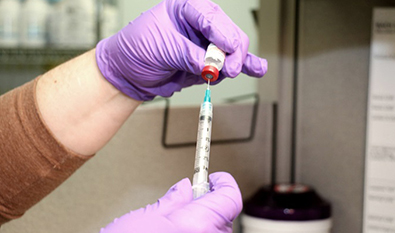
HPV vaccines should be administered intramuscularly in the deltoid region of the upper arm. HPV vaccines do not protect against all HPV types that can cause cancer. Women who have been vaccinated are advised to follow the same screening recommendations as unvaccinated women.

HPV Vaccination (Special Situations)

  • HIV positive or immunocompromised girls – Three doses
  • Interrupted doses– Continue with the remaining doses as per age-based recommendation, vaccination series need not be restarted
  • Pregnancy and Lactation- Not recommended in pregnancy (if inadvertently given, no need for MTP) • Can be given during lactation
  • The vaccination of secondary targets such as boys (9-26Years) and older females is recommended where feasible and affordable.

WHO now recommends: (Updated In a new position paper published in Dec. 2022 WHO)

  • A one or two-dose schedule for girls aged 9-14 years
  • A one or two-dose schedule for girls and women aged 15-20 years
  • Two doses with a 6-month interval for women older than 21 years

But one dose efficacy with Cervavac not yet established.

Vaccine Safety: HPV vaccines are based on virus-like particles (VLPs) that are formed by HPV surface components. VLPs are not infectious because they lack the virus’s DNA. However, they closely resemble the natural virus, and antibodies against the VLPs also have activity against the natural virus.

Over 15 years of monitoring has shown that HPV Vaccine is very safe.

Like any vaccine or medicine, HPV vaccines can have minor side effects. The most common side effects Pain, redness, or swelling in the arm where the shot is given, Dizziness or fainting (fainting after any vaccination, including HPV vaccine, is more common among adolescents), Nausea / Headache etc. The benefits of HPV vaccination far outweigh the risk of potential side effects. To prevent fainting and injuries from fainting, adolescents should be seated or lying down during vaccination and for 15 minutes after getting the shot.

Cervical cancer is one cancer that we can actually eliminate: it’s time to do it.

Eliminating any cancer would have once seemed an impossible dream, but we now have the evidence-based tools to make that dream a reality, they just need to be made accessible and acceptable. In 2020, World Health Organization approved a strategy aimed at eliminating Cervical Cancer worldwide. To eliminate cervical cancer, all countries must reach and maintain an incidence rate of below 4 per 100 000 women.

  • Vaccination: 90% of girls fully vaccinated with the HPV vaccine by the age of 15
  • Screening: 70% of women screened using a high-performance test by the age of 35, and again by the age of 45
  • Treatment: 90% of women with pre-cancer treated and 90% of women with invasive cancer managed

Each country should meet the 90–70–90 targets by 2030 to get on the path to eliminate cervical cancer within the next century. About125 countries have HPV vaccine in their national immunisation programme for girls, with about 47 countries extending the programme also to boys. However, this corresponds to only around a third of the global target population. Introduction of the vaccine in low-income and middle-income countries (LMICs), where 90% of deaths occur, remains slower. There is a long way to go to meet the 2030 elimination target of 90% in India as presently less than 1% of our girls are vaccinated and less than 2% of Indian women have ever been screened according to NFHS-5.

HPV vaccination is our best defence in preventing HPV-related cancers. India has an impressive track record in its childhood immunization program and recently COVID-19 vaccination. Inclusion of HPV Vaccine into the national immunization schedule will undoubtedly boost the fight against cervical cancer. A strong political and bureaucratic will and an effective public awareness campaign with positive messaging are imperative for the success of any such endeavour. By creating awareness, removing misconceptions and myths the cervical cancer menace can be effectively controlled. It takes Government, NGOs, and other concerned organizations to come together to fight against HPV and cervical cancer. Improvements in screening, diagnosis, and treatment are urgently needed, but widespread vaccination against human papillomavirus will have the largest effect towards eliminating the disease.

 The HPV vaccine is CANCER PREVENTION.


Frequently Asked Questions (FAQs)

What are the types of HPV vaccines available in India?

HPV vaccines available in India include Gardasil 9 and Cervavac, with Cervavac being India’s indigenous HPV vaccine. These vaccines protect against HPV types that are associated with cervical cancer and other HPV-related diseases. Vaccine availability and recommendations may change, so individuals should consult a healthcare professional for the most appropriate option.

Who should get the HPV vaccine and at what age?

HPV vaccination is ideally given at 9–14 years of age, before exposure to HPV. Catch-up vaccination may also be recommended for older adolescents and adults depending on age, previous vaccination status and individual circumstances.

How many doses of the HPV vaccine are recommended?

The number of doses depends on age and health status. For children aged 9–14 years, a two-dose schedule is commonly recommended, while older individuals and those who are immunocompromised may require additional doses. The exact schedule should be confirmed with a healthcare professional.

What is the recommended HPV vaccination schedule in India?

The vaccination schedule depends on the person’s age and the vaccine being used. For younger adolescents, doses are generally given several months apart, while older age groups may require a three-dose schedule. A doctor can recommend the appropriate schedule based on current guidelines.

Can boys and men get the HPV vaccine?

Yes. HPV vaccination can also be given to boys and men because HPV infection can contribute to several cancers and other conditions affecting both males and females. Vaccination recommendations may vary according to age and individual circumstances.

Can the HPV vaccine prevent cervical cancer?

Yes. HPV vaccination can help prevent infection with HPV types that commonly cause cervical cancer. It is an important part of cervical cancer prevention, but vaccination does not eliminate the need for recommended cervical cancer screening.

Does the HPV vaccine protect against all types of HPV?

No. HPV vaccines protect against specific HPV types associated with cancers and other HPV-related conditions, but they do not cover every HPV type. Therefore, vaccinated individuals should continue to follow recommended preventive and screening measures.

Can the HPV vaccine be given after becoming sexually active?

Yes, HPV vaccination may still provide benefits after someone becomes sexually active because they may not have been exposed to all HPV types covered by the vaccine. However, vaccination is most effective when given before exposure to HPV.

What are the common side effects of the HPV vaccine?

Common side effects are generally mild and may include pain, redness or swelling at the injection site, headache, nausea, dizziness or temporary fainting. Staying seated or lying down for around 15 minutes after vaccination can help reduce the risk of injury from fainting.

Is the HPV vaccine safe?

Yes. HPV vaccines have been extensively studied and monitored for safety. Like other vaccines, they can cause temporary side effects, but serious reactions are uncommon. The benefits of HPV vaccination in preventing HPV-related diseases generally outweigh the potential risks.

Can HPV vaccination replace cervical cancer screening?

No. HPV vaccination does not protect against every HPV type that can cause cancer and does not treat existing HPV infections. Women who have received the vaccine should continue to follow recommended cervical cancer screening guidelines.

Dr. Indu Aggarwal
HOD, Department of Preventive Oncology, RGCIRC, Rohini

Related Articles

featured

Cervical Cancer