RGCIRC Team
Throat Cancer
24 August, 2026
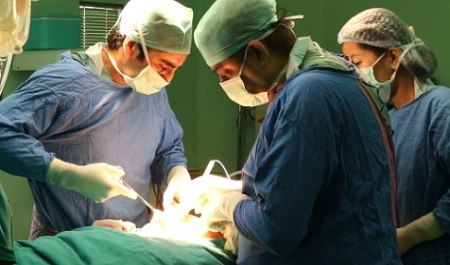
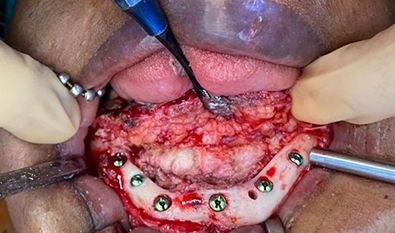
Tongue cancer surgery refers to the surgical procedure of the removal of cancer cells from the tongue. It is also called glossectomy. If the cancer is small, then the tongue is removed partially which is called partial glossectomy.
Patients who have undergone glossectomy as a tongue cancer treatment will need to stay in the hospital to take rest for a few days following the surgery. The duration of the stay at the hospital will be based on how much part and from where the cancer cells are removed from the tongue.
Most of them can get discharged within a few days after the surgery. If required, the nursing staff may teach you to take care of your drains, tubes or dressing before you leave the hospital.
It may take a lot of weeks to feel better after the surgery. Even if the patient has left the hospital, there will be some special care required to be taken at home.
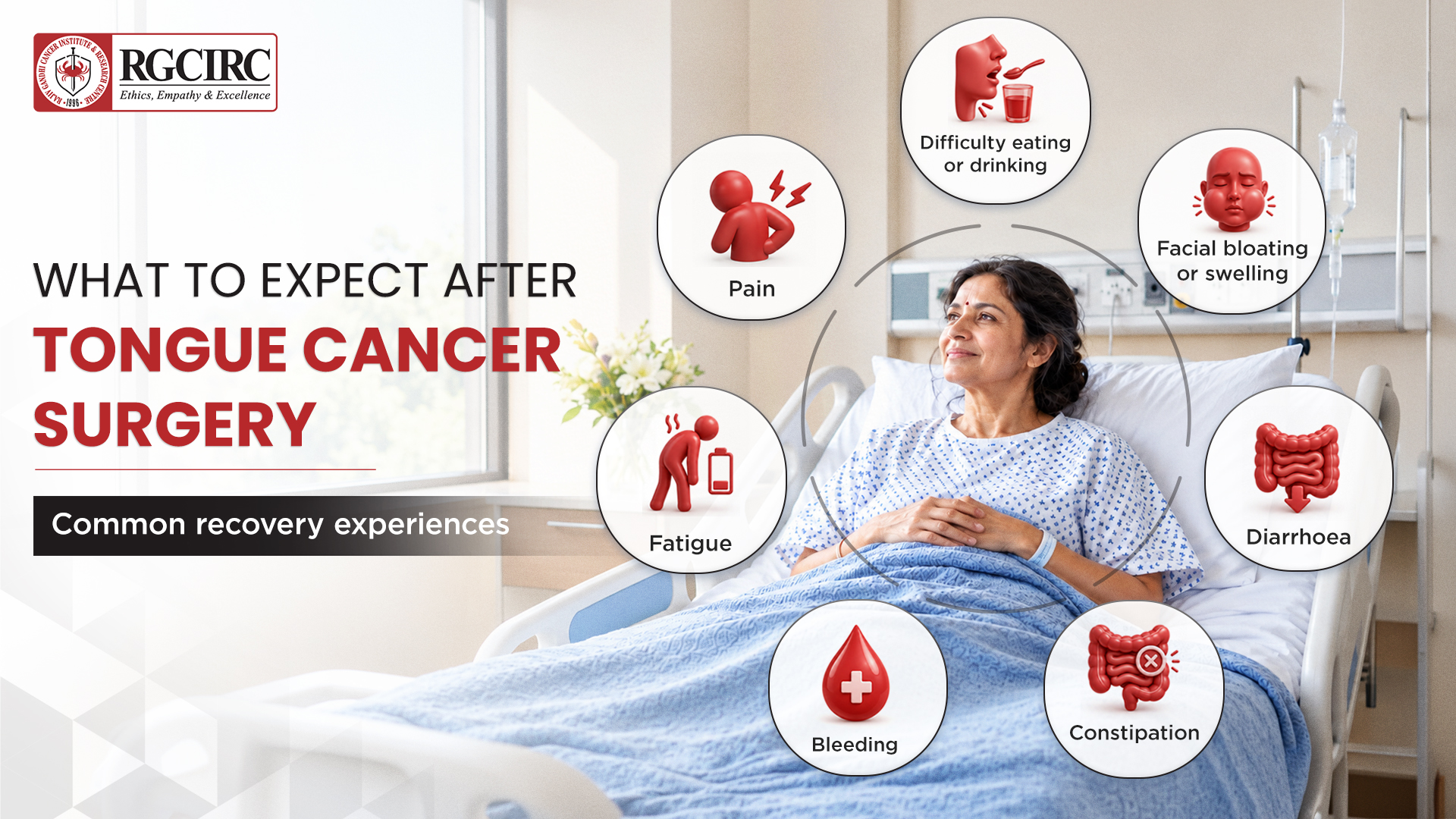
The patient may expect the following things during the recovery period:
Patients might face some trouble while drinking or eating. They might need to learn a new method to swallow food because they will have trouble swallowing normally. A therapist or a nurse will teach the process of swallowing food to the patient after the surgery. If the patient cannot swallow or drink, then a feeding tube will be inserted through the mouth so that the nutritional needs can be met.
After the tongue surgery, the face may become swollen or bloated. It will be like that for a few days but settle down gradually. The doctor will advise you on how you can manage the bloating or swelling.
Also Read: WHAT IS THE SURVIVAL RATE OF ORAL CANCER?
Patients may suffer from diarrhoea due to the infection, stress or tube feeding after the surgery. A dietician can recommend the right food for the patient to deal with this condition
Patients may experience constipation due to not eating properly, being inactive, or pain killer medicines. A nurse or doctor can guide you through the best ways to prevent constipation.
One of the side effects after tongue surgery can be bleeding from the mouth. The oozing or bleeding in the mouth can be caused by the incision done during the surgery.
Patients may experience some kind of weakness or tiredness for some time after the surgery. The recovery time after the surgery for each patient will depend on the type of surgery performed.
The patient may feel pain for a few weeks after the surgery. There are many pain-relieving options that will be suggested by a nurse or doctor such as pain killer medicines. You will not feel any pain after taking these medications and the recovery process will be smoother.
Also Read: ROLE OF BRACHYTHERAPY IN TREATMENT OF ORAL TONGUE CANCER
If you are using a feeding tube, then the therapist or nurse will teach you how to use it. Patients may need to use a gastrostomy tube for some time until they can start swallowing enough food without the tube. The patient might need to use the tube for a longer period if the treatment keeps him or her from swallowing properly.
In case of a patient having a tracheostomy, a respiratory therapist may teach him or her some exercise to breathe easily.
The wound in the mouth needs to be regularly checked by the doctor. The doctor will schedule a follow-up visit for the patient after the surgery. The patient will also need to see the doctor for the removal of stitches.
Also, based on needs, the patient may be required to schedule an appointment with a dental specialist, speech pathologist, dietitian, respiratory therapist, and physical therapist.
After the patient is healed from the surgery, he or she may require extra treatment to decrease the chances of cancer coming back. These extra cancer treatments can be either chemotherapy or radiation or a combination of both. Additional cancer treatment after the surgery is also known as adjuvant therapy.
Also Read: MOUTH CANCER SIGNS AND SYMPTOMS
There can be some complications or problems after surgery for a few patients. They should consult the doctor immediately if any of the following happens:
Recovery after tongue cancer surgery varies depending on the type and extent of surgery, the patient’s overall health and whether additional treatment is needed. Some patients recover within a few weeks, while others may require several months for swallowing, speech and daily activities to improve.
Swelling of the tongue, mouth or surrounding area can occur after surgery and usually improves gradually as healing progresses. However, significant or worsening swelling, especially with difficulty breathing or swallowing, should be evaluated by a doctor promptly.
Your diet may initially include liquids, soft foods or other modified textures depending on your ability to swallow. A doctor or dietitian can recommend appropriate foods and gradually adjust your diet as healing progresses.
Speech changes can occur after tongue surgery, particularly when a significant portion of the tongue has been removed. Speech and language therapy may help improve communication and assist with adapting to changes.
Swallowing difficulties can be addressed with guidance from a speech and swallowing therapist. Therapy may include specific exercises, changes in food consistency and techniques to make swallowing safer and easier.
Some patients may temporarily require a feeding tube if they cannot consume enough food or liquids safely by mouth. The need and duration depend on the extent of surgery and the patient’s swallowing recovery.
Pain is common during the early recovery period and can generally be managed with medicines prescribed by the treating doctor. Patients should inform their healthcare team if pain becomes severe or does not improve with the prescribed treatment.
The time required to resume normal activities depends on the extent of surgery and individual recovery. Your doctor can advise when you can safely return to work, exercise and other daily activities.
Additional treatment may be recommended depending on the cancer stage, surgical findings and other risk factors. Your oncology team will determine whether radiation therapy, chemotherapy or another treatment is appropriate.
Regular follow-up is important to monitor healing, manage treatment-related effects and check for any signs of recurrence. Your treating team will determine the appropriate follow-up schedule based on your individual condition.
Increasing pain, significant bleeding, fever, worsening swelling, breathing difficulty, problems swallowing or changes around the surgical site should be reported to your healthcare team promptly.

Throat Cancer
Throat Cancer
Mouth CancerThroat Cancer
 My Reports
 RGCIRC, Niti Bagh