

alarm RGCIRC, Niti Bagh alarm Emergency - 24/7 Book an Appointment Find a Doctor

RGCIRC Team

Cancer

22 September, 2026

Table of Contents

Children often experience fevers, tiredness, aches, swollen glands and changes in appetite as part of common childhood illnesses. In most cases, these symptoms are temporary and harmless. The concern begins when a change does not settle, keeps returning or gradually becomes more noticeable. Because childhood cancers are uncommon and their early signs can resemble everyday illnesses, recognising when further medical evaluation is needed is not always straightforward.

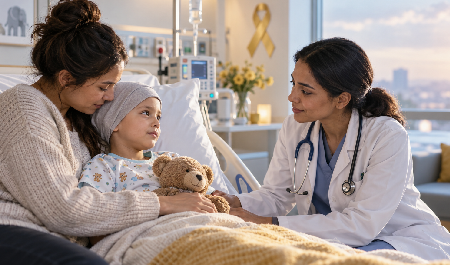
Observed throughout September, Childhood Cancer Awareness Month 2026 helps bring these concerns into focus. It encourages families to understand possible warning signs, seek timely medical advice when something seems unusual and learn more about the specialised care children with cancer may need. Just as importantly, the month highlights the progress being made in diagnosis and treatment, while drawing attention to survivorship care, which supports a child’s growth, development and long-term health after treatment ends.

Why Gold is the Colour of Childhood Cancer Awareness

September is recognised globally as Childhood Cancer Awareness Month, often referred to as Gold September. Gold is the international symbol of childhood cancer awareness and is used to honour children and adolescents affected by cancer, survivors and their families. Each September, communities, healthcare organisations and advocacy groups use gold ribbons, awareness activities and illuminated landmarks to draw attention to childhood cancer and inequalities in access to care.

Gold September 2026: Together, We Turn the World Gold

For Gold September 2026, Childhood Cancer International (CCI) and the International Society of Paediatric Oncology (SIOP) are coming together under the campaign “Together, We Turn the World Gold.” Throughout September, survivors, families, healthcare professionals, organisations and communities are being encouraged to wear gold, share their stories and organise awareness activities.

The campaign will culminate on 30 September 2026, when regions around the world will take part in a coordinated “Turn the World Gold” moment as midday moves across different time zones.

From Challenge to Change: The Wider 2026 Childhood Cancer Message

The September campaign also sits within a wider year of global childhood cancer advocacy. International Childhood Cancer Day 2026 marks the final year of CCI’s 2024–2026 campaign, with the theme “Demonstrating Impact: From Challenge to Change.”

After identifying major challenges in 2024 and highlighting solutions in 2025, the 2026 phase focuses on demonstrating the progress that collective action can make, particularly in improving equal access to childhood cancer diagnosis, treatment and care.

How is Childhood Cancer Different from Cancer in Adults?

Childhood cancer is not simply adult cancer occurring at a younger age.

Many of the cancers commonly diagnosed in adults, such as breast, lung, prostate and colorectal cancers, are uncommon in children. Instead, children are more likely to develop cancers such as leukaemia, brain tumours, neuroblastoma and Wilms tumour. During adolescence, lymphomas, bone cancers and thyroid cancer become more prominent.

The causes are also different. Lifestyle and environmental exposures accumulated over decades contribute to several adult cancers. Most childhood cancers, however, do not have a clearly identifiable cause, and very few are linked to lifestyle factors. Approximately 8–10% of childhood cancers are associated with an inherited cancer-predisposition gene, although this varies substantially between cancer types.

This has an important implication for parents: childhood cancer is generally not something that could have been prevented by changing a child’s diet, activity or everyday routine.

Screening is also different. There are no population-wide screening programmes for most childhood cancers. In certain children with known inherited cancer-predisposition conditions, doctors may recommend specific surveillance, but this is different from routine screening of healthy children.

Common Types of Childhood Cancer

Childhood cancer includes many different diseases. Each begins in a particular type of cell and requires its own diagnostic and treatment approach.

Leukaemia

Leukaemia is one of the most common childhood cancers. It begins in the blood-forming tissues, including the bone marrow, and causes abnormal blood cells to multiply.

Two important types seen in children are:

  • Acute lymphoblastic leukaemia (ALL)
  • Acute myeloid leukaemia (AML)

Because leukaemia affects the bone marrow, children may develop fatigue, paleness, infections, fever, bruising or bleeding as the production of healthy blood cells becomes affected.

Brain and Central Nervous System Tumours

Tumours can develop in different parts of the brain or spinal cord. Their effects depend partly on their location, size and how quickly they grow.

Possible signs may include persistent headaches, repeated vomiting, balance problems, seizures, changes in vision or behaviour, and developmental changes in younger children.

Lymphoma

Lymphoma begins in lymphocytes – white blood cells involved in the immune system. The two broad groups are:

One possible sign is persistent, usually painless swelling of lymph nodes, although swollen lymph nodes are far more commonly caused by infections.

Neuroblastoma

Neuroblastoma develops from immature nerve cells and occurs mainly in younger children. It can begin in several parts of the body, although the adrenal glands and areas along the spine are common sites.

Symptoms vary with tumour location and may include an abdominal lump, pain, changes in bowel or bladder function or other unexplained symptoms.

Wilms Tumour

Wilms tumour is a kidney cancer that occurs mainly in young children. A parent may first notice swelling or a lump in the abdomen. Some children may also develop abdominal pain, fever, blood in the urine or high blood pressure.

Bone and Soft-Tissue Sarcomas

Cancers can also develop in bones, muscles and other connective tissues.

Osteosarcoma and Ewing sarcoma are important childhood and adolescent bone cancers. Persistent bone pain, swelling or problems using a limb may need investigation.

Rhabdomyosarcoma begins in cells that normally develop into skeletal muscle and can occur in different parts of the body.

Retinoblastoma

Retinoblastoma is a rare cancer of the retina that usually occurs in very young children. One recognised warning sign is an unusual white reflection in the pupil, sometimes first noticed in photographs. A new squint or other unexplained eye change should also be assessed.

These are some of the commonly known childhood cancers, but several rarer types also occur. The exact diagnosis matters because treatment for one childhood cancer may be very different from treatment for another.

Possible Signs and Symptoms of Childhood Cancer

There is no single symptom that identifies childhood cancer. Most possible warning signs are more often caused by common childhood illnesses.

Parents do not need to watch every minor symptom anxiously. What matters is recognising a pattern that is persistent, worsening, unexplained or noticeably different from the child’s usual health.

Persistent Changes in General Health

Possible changes may include:

  • Unexplained or persistent fever
  • Unusual tiredness or weakness
  • Persistent paleness
  • Unexplained weight loss
  • Reduced appetite
  • Recurrent or unusually severe infections
  • Drenching night sweats in some blood cancers

Unexplained Lumps, Swelling or Bleeding

Seek medical advice for changes such as:

  • A persistent or enlarging lump
  • Lymph nodes that remain enlarged without an obvious explanation
  • Abdominal swelling or a noticeable abdominal mass
  • Easy or unusual bruising
  • Unexplained bleeding
  • Tiny red or purple spots on the skin associated with low platelets in some blood disorders

Persistent Bone Pain or Changes in Movement

A child may experience:

  • Persistent bone or joint pain
  • Swelling around a bone or joint
  • An unexplained limp
  • Reluctance to walk or use a limb
  • Persistent back pain

Ordinary growing pains and minor injuries are much more common than cancer. The concern increases when pain persists, worsens or is accompanied by swelling or other unexplained symptoms.

Headaches, Vomiting and Neurological Changes

Medical assessment may be needed for:

  • Persistent or recurrent headaches
  • Repeated vomiting associated with headaches
  • New balance or coordination problems
  • Seizures
  • Unexplained changes in vision
  • New weakness
  • Noticeable changes in behaviour or development

A single symptom rarely tells the whole story. Doctors consider the pattern, duration and combination of symptoms, alongside examination findings.

Why Early Recognition Matters Even Without Routine Screening

There are no routine population screening programmes for most childhood cancers. In many cases, the path to diagnosis begins when a parent, caregiver or healthcare professional notices a change that needs further evaluation.

Early recognition matters because it can help a child move through the next steps without unnecessary delay:

  • Recognising a concerning pattern: Symptoms that persist, worsen or remain unexplained may need medical assessment.
  • Reaching an accurate diagnosis: Appropriate tests help identify the exact cancer type and determine its extent.
  • Starting the right treatment promptly: Once the diagnosis is confirmed, timely referral to a specialised paediatric oncology team helps treatment planning begin.

The World Health Organization describes these steps as central to the early diagnosis of childhood cancer. Delayed or missed diagnosis can contribute to poorer outcomes, particularly where access to specialist testing and treatment is limited.

This version is tighter, avoids repeating fever/bone pain/lymph-node examples, and gives the section a clearer purpose.

How is Childhood Cancer Diagnosed?

There is no single test for all childhood cancers. Doctors select investigations according to the child’s symptoms, examination findings and the cancer being considered.

Medical History and Physical Examination

The doctor usually begins by asking about:

  • When symptoms started
  • Whether they are worsening or recurring
  • Recent illnesses
  • Growth and development
  • Previous medical conditions
  • Relevant family history

The physical examination may include checking lymph nodes, the abdomen, bones and joints, neurological function or other areas depending on the symptoms.

Blood and Laboratory Tests

A complete blood count can provide information about red blood cells, white blood cells and platelets and may raise suspicion of conditions such as leukaemia.

Other tests may assess organ function, electrolytes, tumour-related markers or other abnormalities.

A normal routine blood test, however, does not rule out every childhood cancer.

Imaging Tests

Imaging may include:

  • Ultrasound
  • X-ray
  • CT scan
  • MRI
  • PET-CT in selected situations

The appropriate test depends on the part of the body being investigated.

Biopsy and Bone Marrow Examination

For many solid tumours, doctors recommend a biopsy, in which a tissue sample is examined by a pathologist to determine what type of tumour is present.

When leukaemia or another bone marrow disorder is suspected, bone marrow aspiration and biopsy may help identify abnormal cells and establish the diagnosis.

Molecular and Genetic Testing

Cancer classification increasingly goes beyond what cells look like under a microscope.

Molecular, cytogenetic or genetic tests can identify biological features that may help doctors:

  • Refine the diagnosis
  • Classify the cancer into a risk group
  • Estimate how it may behave
  • Select targeted treatments in appropriate cases
  • Identify possible inherited cancer-predisposition conditions when clinically suspected

The goal is not simply to diagnose “childhood cancer”. It is to understand exactly which cancer is present, its extent and the characteristics that may influence treatment.

How is Childhood Cancer Treated?

Childhood cancer treatment is highly individualised. The care team considers the cancer type, stage or risk group, tumour biology, the child’s age and overall health, and how the disease responds to treatment.

Treatment may involve one or more approaches.

Chemotherapy

Chemotherapy remains central to the treatment of many childhood cancers, particularly leukaemias and lymphomas. It is also used for several solid tumours.

Treatment schedules and combinations vary widely, and some childhood cancer protocols continue over months or even years.

Surgery

Surgery is important for many solid tumours.

Depending on the cancer, surgery may aim to remove the tumour completely, obtain tissue for diagnosis or reduce tumour burden. Paediatric cancer surgery also places considerable emphasis on preserving organs, limbs and function whenever this can be achieved safely.

Radiotherapy

Radiotherapy uses targeted radiation to damage cancer cells.

Because children’s organs and tissues are still developing, doctors carefully consider whether radiation is needed and how it can be delivered while limiting exposure to healthy tissue.

Stem Cell Transplantation

A haematopoietic stem cell transplant, commonly called a bone marrow transplant, may be considered for selected children with high-risk, relapsed or difficult-to-treat blood cancers and some non-cancerous blood disorders.

It is a specialised treatment and is not necessary for every

child with cancer.

How Childhood Cancer Treatment is Advancing

Advances in childhood cancer care are not simply about developing more powerful treatments. The aim is to identify which children need intensive treatment, which may benefit from more precise therapies and where treatment intensity can safely be reduced.

More Precise Risk-Based Treatment

Doctors increasingly use factors such as molecular findings, disease characteristics and early treatment response to place children into different risk groups.

This can help tailor therapy. A child with higher-risk disease may need more intensive treatment, while another may be able to avoid unnecessary exposure to certain therapies.

Targeted Therapy

Some childhood cancers carry specific molecular changes that medicines can target.

Targeted treatments are not available for every paediatric cancer, but molecular testing is helping identify selected children who may benefit from medicines designed to interfere with particular cancer-driving pathways.

Immunotherapy

Immune-based treatments are also changing the management of some childhood blood cancers.

For example, monoclonal antibodies and other immune-directed therapies may be used in selected cases.

CAR T-Cell Therapy

CAR T-cell therapy involves collecting a patient’s own T cells, modifying them so they can recognise a particular target on cancer cells, and returning them to the patient.

It has created an additional treatment option for selected children and young people with certain relapsed or refractory B-cell acute lymphoblastic leukaemias. It is a highly specialised therapy and is not appropriate for every child or every cancer.

Improving Access to Child-Friendly Cancer Medicines

Treatment progress also depends on whether medicines are actually available in formulations that children can use.

In September 2026, WHO issued its first invitation for manufacturers of childhood cancer medicines to submit products for evaluation through its Prequalification Programme. Twelve essential medicines were included, with particular attention to medicines needing child-friendly formulations and those affected by supply or access gaps.

This matters because an effective medicine offers limited benefit if the right formulation, quality or reliable supply is unavailable to the children who need it.

Supportive Care is an Essential Part of Treatment

Treating childhood cancer means caring for the whole child, not only treating cancer cells.

Infection Prevention and Side-Effect Management

Chemotherapy, stem cell transplantation and some other treatments may weaken immunity or reduce blood counts.

Children may require close monitoring for fever and infection, blood or platelet transfusions, medicines for nausea and pain, and treatment for mouth sores or other complications.

Parents should follow their oncology team’s instructions about when fever or another symptom requires urgent medical attention.

Nutrition and Rehabilitation

Cancer and its treatment can affect appetite, weight, strength and activity.

Dietitians can help children meet nutritional needs during treatment, while physiotherapy or rehabilitation may help maintain or rebuild mobility, strength and independence when required.

Psychological, School and Social Support

Treatment can interrupt school, friendships, play and everyday family routines.

Age-appropriate psychological support, play, learning activities and communication can help children cope with the disruption and uncertainty of treatment.

Parents and siblings also need support. Families may face repeated hospital visits, financial pressures, changes in work and caregiving responsibilities, and anxiety about what comes next.

Life After Childhood Cancer: Why Survivorship Care Matters

Finishing cancer treatment is an important milestone. For many families, however, it does not mean medical follow-up simply ends.

Some treatment effects develop months or years later. These are known as late effects. Their likelihood depends on the cancer, the child’s age at treatment and the type and dose of therapies received. (Cancer.gov)

Long-term follow-up may therefore consider:

  • Growth and physical development
  • Heart and lung health
  • Hormonal and endocrine function
  • Fertility and reproductive health
  • Bone health
  • Hearing and vision
  • Kidney or other organ function
  • Learning, memory and concentration
  • Emotional and psychological wellbeing
  • Risk of second cancers in certain survivors

Not every survivor develops these problems. Follow-up is personalised according to the child’s treatment exposures and individual risks.

The Value of a Survivorship Care Plan

A survivorship care plan can help families keep track of:

  • The original cancer diagnosis
  • Treatments received
  • Important treatment doses or exposures
  • Possible long-term health risks
  • Recommended examinations and tests
  • Specialists who may need to be involved in future care

NCI recommends long-term follow-up for childhood cancer survivors and highlights the importance of maintaining a treatment summary and individualised survivorship care plan.

Survivorship care is ultimately about helping a child move beyond cancer while continuing to support growth, education, relationships, physical health and emotional wellbeing.

Why the Childhood Cancer Survival Gap Still Matters

Progress in childhood cancer has been substantial, but children do not benefit equally from it.

WHO reports that more than 80% of children with cancer are cured in many high-income countries, compared with less than 30% in many low- and middle-income countries. Delayed diagnosis, limited access to accurate testing or treatment, treatment abandonment, toxicity and relapse all contribute to this difference.

The gap therefore cannot be addressed through new medicines alone. Improving survival also requires reliable access to:

  • Accurate diagnosis
  • Essential cancer medicines
  • Specialist paediatric oncology teams
  • Safe chemotherapy, surgery and radiotherapy
  • Infection management and supportive care
  • Blood and transfusion services
  • Family support that helps children complete treatment
  • Long-term follow-up

WHO’s Global Initiative for Childhood Cancer aims to achieve at least 60% survival for childhood cancer worldwide by 2030.

This is one of the reasons Childhood Cancer Awareness Month matters. Awareness must ultimately translate into children reaching the right care and being able to complete it.

When Should Parents Seek Medical Advice?

Most childhood illnesses are not cancer. Parents should therefore not feel that every fever, bruise or episode of tiredness requires cancer testing.

Medical evaluation becomes important when a symptom:

  • Persists without a clear explanation
  • Continues to worsen
  • Repeatedly returns
  • Occurs together with several other unexplained changes
  • Causes a noticeable decline in normal activity, appetite or mobility
  • Raises ongoing concern for the parent or caregiver

Seek urgent medical care for severe breathing difficulty, major bleeding, seizures, loss of consciousness or another sudden serious change in a child’s condition.

Parents know their child’s usual behaviour and health patterns well. When something remains noticeably different, discussing it with a paediatrician is a reasonable next step.

From Childhood Cancer Treatment to Life Beyond Cancer

Childhood Cancer Awareness Month 2026 reminds us that caring for a child with cancer involves much more than reaching a diagnosis or completing a treatment protocol. Children need age-appropriate medical care, careful management of treatment side effects, emotional support, opportunities to continue learning and playing, and follow-up that considers their health years into the future.

At Rajiv Gandhi Cancer Institute & Research Centre (RGCIRC), children and adolescents with cancer receive specialised care through a multidisciplinary paediatric haematology-oncology programme. The team manages childhood leukaemias, lymphomas, brain tumours, bone and soft-tissue sarcomas and other paediatric solid tumours, with support from paediatric surgical oncology, radiation oncology, pathology, imaging, bone marrow transplantation, nursing, nutrition, counselling and play-based services. RGCIRC also provides follow-up after completion of therapy to monitor for late effects and support long-term health.

The aim is not only to treat cancer, but to support children and their families through diagnosis, treatment, recovery and the years that follow.

To consult a cancer specialist at Rajiv Gandhi Cancer Institute & Research Centre, call +91-11-47022222 or visit https://www.rgcirc.org/

Frequently Asked Questions

When is Childhood Cancer Awareness Month 2026?

Childhood Cancer Awareness Month is observed throughout September. Gold is the internationally recognised colour associated with childhood cancer awareness, which is why the month is often called Gold September.

What is the theme for Childhood Cancer Awareness Month 2026?

For Gold September 2026, the campaign message is “Together, We Turn the World Gold,” encouraging communities worldwide to raise awareness and support children and adolescents affected by cancer. The wider 2026 childhood cancer advocacy theme is “Demonstrating Impact: From Challenge to Change,” which highlights progress in improving access to diagnosis, treatment and care.

Can childhood cancer be detected through routine screening?

Generally, no. There are no routine population screening programmes for most childhood cancers. Diagnosis usually begins when symptoms or examination findings lead to further investigation. Children with certain inherited cancer-predisposition conditions may require specialised surveillance.

Are childhood cancers hereditary?

Most are not. The causes of most childhood cancers remain unknown, although approximately 8–10% are associated with an inherited cancer-predisposition gene. Genetic counselling or testing may be considered when the child’s cancer type, family history or other clinical features suggest an inherited condition.

Can children recover completely from cancer?

Yes. Many childhood cancers are curable, although outcomes vary considerably according to the cancer type, disease characteristics, availability of specialised treatment and other factors. Globally, survival also differs greatly according to access to appropriate care.

Does every child with cancer need chemotherapy?

No. Treatment depends on the exact cancer and may involve chemotherapy, surgery, radiotherapy, targeted therapy, immunotherapy or stem cell transplantation, alone or in combination. Some treatments are appropriate only for particular cancer types or risk groups.

Can childhood cancer treatment affect growth or fertility later in life?

Some treatments may affect growth, hormones, fertility or other aspects of long-term health, although the risk differs from child to child. Survivorship follow-up helps identify which late effects a particular survivor may be at risk for and what monitoring is appropriate. (Cancer.gov)

What should parents look for when choosing a childhood cancer centre?

Look for access to paediatric oncologists and haemato-oncologists, specialised pathology and imaging, paediatric cancer surgery, chemotherapy and radiotherapy where required, transplant expertise, infection and transfusion support, nutrition and psychological care, and long-term survivorship follow-up. A multidisciplinary approach is particularly important because childhood cancer treatment often requires several specialties to work together.