RGCIRC Team
Cancer
7 August, 2026
Bone marrow plays a vital role in producing the blood cells that keep the body functioning normally. When cancer develops in the bone marrow, it disrupts this process, affecting the production of red blood cells, white blood cells, and platelets. As a result, patients may experience a range of symptoms that can gradually affect overall health and immunity. Because many early signs are subtle or resemble common health issues, bone marrow cancer may remain undetected in its initial stages.
Recognising the early warning signs and seeking timely medical evaluation can make a significant difference in outcomes. Advances in cancer research have also transformed the way bone marrow cancers are diagnosed and treated, introducing more targeted therapies and innovative treatment approaches that improve survival and quality of life.
In this article, we’ll explore the early signs of bone marrow cancer that should not be ignored and highlight the latest treatment breakthroughs that are reshaping care for patients with blood cancers.
Bone marrow cancer refers to cancers that originate in the bone marrow, the soft tissue located inside many bones. In this condition, abnormal cells develop within the marrow and begin to grow and multiply uncontrollably. Over time, these cancerous cells interfere with the marrow’s ability to produce healthy blood cells.
As the abnormal cells increase, they can crowd out normal blood-forming cells, affecting the balance of essential blood components in the body. This disruption may lead to a variety of health problems related to reduced oxygen transport, weakened immunity, or changes in the body’s ability to control bleeding.
Bone marrow cancers are usually classified as blood cancers, and they may occur in different forms, such as multiple myeloma, certain types of leukaemia, or other marrow-based malignancies. The exact type of cancer determines how the disease behaves and the treatment approach that may be recommended.
Bone marrow plays a vital role in maintaining healthy blood circulation and immune function. Located inside many bones, particularly the hips, spine, ribs, and long bones, bone marrow continuously produces the cells that circulate in the bloodstream and support several essential body processes.
The bone marrow contains specialised stem cells that develop into different types of blood cells required for normal body functioning.
Red blood cells are responsible for carrying oxygen from the lungs to tissues throughout the body. Healthy bone marrow ensures a steady supply of these cells, allowing organs and muscles to receive the oxygen they need to function properly.
White blood cells are a key component of the immune system. They help the body recognise and fight infections caused by bacteria, viruses, and other harmful organisms.
Platelets play an important role in blood clotting. When a blood vessel is injured, platelets help form clots that prevent excessive bleeding and support wound healing.
When cancer develops in the bone marrow, it can disrupt the production of these essential blood cells. This disruption often leads to symptoms such as fatigue, infections, or abnormal bleeding, which may signal an underlying problem affecting the marrow.
Bone marrow cancer is a broad term used to describe several types of blood cancers that originate in or affect the bone marrow. These cancers develop from different blood-forming cells and may vary in how they progress and how they are treated. Understanding the major types helps explain why symptoms and treatment approaches can differ from one patient to another.
Multiple myeloma develops in plasma cells, a type of white blood cell responsible for producing antibodies that help fight infections. In this condition, abnormal plasma cells multiply in the bone marrow and interfere with the production of healthy blood cells. Multiple myeloma often affects bones and may lead to bone pain, weakened bones, or fractures.
Leukaemia is a cancer of the blood-forming cells, particularly white blood cells. In leukaemia, the bone marrow produces large numbers of abnormal white blood cells that do not function properly. These abnormal cells crowd out healthy blood cells, which can result in symptoms such as fatigue, frequent infections, and easy bruising or bleeding.
Lymphoma is a cancer that begins in the lymphatic system, which is part of the body’s immune defence network. In some cases, lymphoma can spread to the bone marrow and disrupt normal blood cell production. When this occurs, patients may experience symptoms such as swollen lymph nodes, fatigue, or unexplained weight loss.
Although these cancers share the common feature of affecting the bone marrow, each type has distinct biological characteristics and may require different treatment strategies.
The early symptoms of bone marrow cancer can sometimes be subtle and may resemble common health problems such as fatigue or infections. Because these signs are often gradual, they may go unnoticed in the initial stages. However, recognising persistent symptoms can help ensure timely medical evaluation and diagnosis.
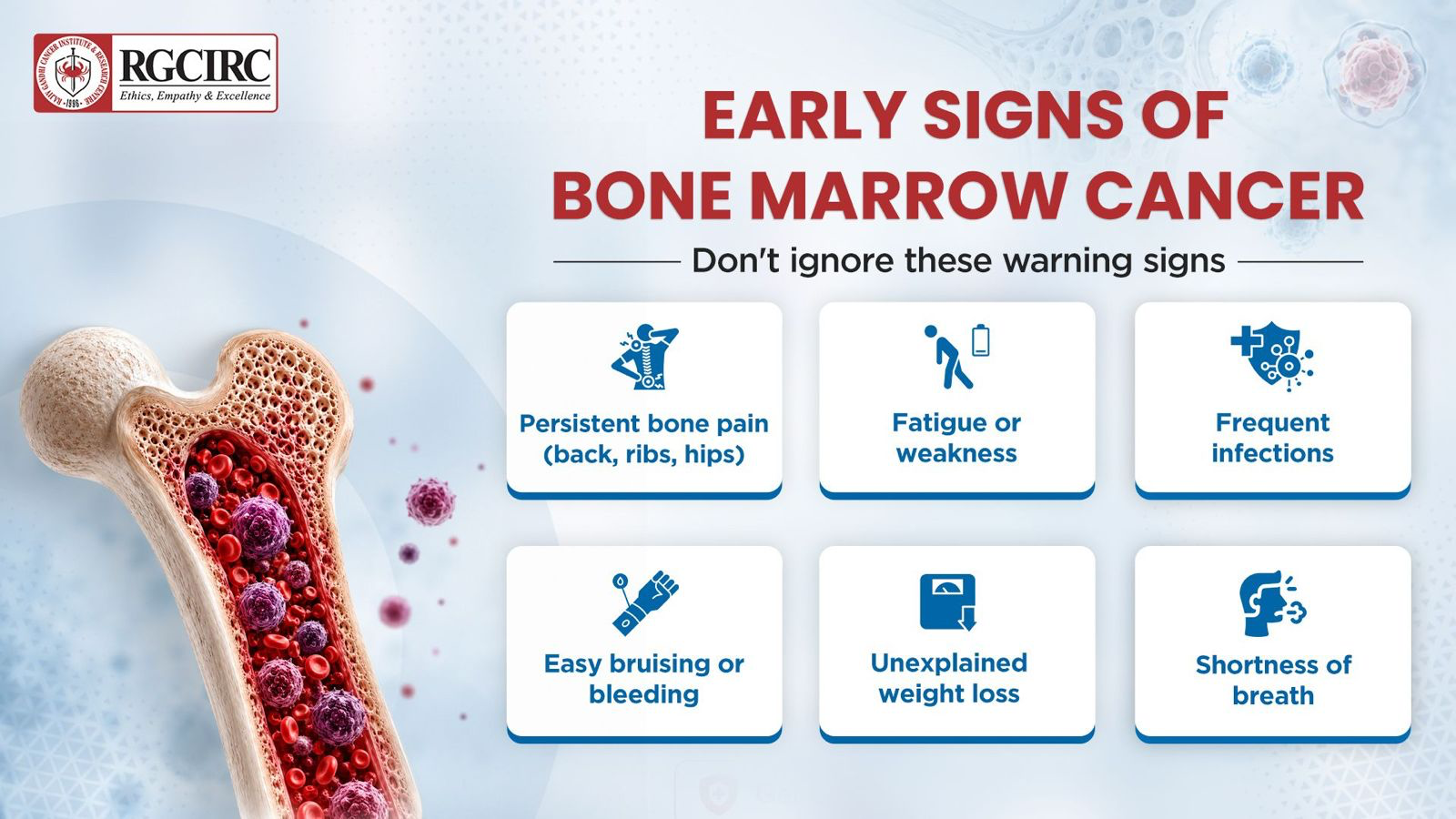
Common early symptoms may include:
Doctors often use the CRAB criteria to identify organ damage associated with multiple myeloma, one of the common bone marrow cancers. The CRAB acronym represents key clinical features that may indicate disease progression:
If these symptoms persist or gradually worsen, medical evaluation may help determine whether further investigation is needed.
The exact cause of bone marrow cancer is not always known. In many cases, the disease develops when genetic changes occur in the cells responsible for producing blood cells. These changes can cause the cells to grow and divide uncontrollably, eventually leading to the development of cancer within the bone marrow.
Although the precise trigger may not always be identifiable, several factors are known to increase the risk of developing certain types of bone marrow cancers.
Common risk factors may include:
While these factors may raise the risk, it is important to remember that many people diagnosed with bone marrow cancer may not have any identifiable risk factors. Regular medical evaluation and attention to persistent symptoms remain important for early detection.
Diagnosing bone marrow cancer involves a combination of clinical evaluation, laboratory tests, and specialised investigations. Because these cancers affect blood-forming tissues, doctors often begin by analysing blood samples and then perform additional tests to confirm the diagnosis and determine the specific type of cancer. Diagnostic process include:
Routine blood tests are often the first step in evaluation. These tests measure the levels of red blood cells, white blood cells, and platelets. Abnormal counts may indicate that the bone marrow is not producing blood cells normally.
A bone marrow biopsy is one of the most important tests used to confirm bone marrow cancer. During this procedure, a small sample of bone marrow is collected, usually from the hip bone, and examined under a microscope to identify abnormal or cancerous cells.
Imaging studies such as CT scans, MRI scans, or PET scans may be used to assess the extent of the disease. These tests help doctors evaluate whether the cancer has affected bones or other parts of the body.
Modern diagnostic techniques can analyse the genetic characteristics of cancer cells. Identifying specific mutations or molecular markers can help doctors choose targeted therapies that are most likely to be effective.
In modern blood cancer treatment, doctors also evaluate Minimal Residual Disease (MRD)—a highly sensitive test that detects extremely small numbers of cancer cells that may remain after treatment. MRD testing is considered an important tool for monitoring treatment response and determining the depth of remission.
Advances in cancer research and medical technology have significantly improved treatment options for many blood cancers. Modern therapies increasingly focus on targeting cancer cells more precisely while preserving healthy tissue and improving long-term outcomes. Latest treatments in bone marrow cancer include:
Targeted therapy uses medicines designed to block specific molecular pathways that drive cancer growth. Next-generation targeted drugs, including tyrosine kinase inhibitors (TKIs), act on abnormal proteins involved in the development of certain blood cancers. By targeting these pathways directly, these treatments can slow or stop cancer progression while reducing damage to normal cells.
Newer immunotherapy approaches harness the body’s immune system to recognise and destroy cancer cells. One promising development is Bispecific T-cell Engagers (BiTEs), which function as “bridge-builders” that link immune cells directly to cancer cells, enabling the immune system to attack the tumour more effectively. These therapies are increasingly being explored in conditions such as multiple myeloma.
CAR-T therapy is often described as “living medicine.” In this treatment, a patient’s own T-cells are collected and genetically modified in a laboratory to recognise and attack cancer cells. Once these engineered cells are infused back into the patient’s body, they can continue identifying and destroying cancer cells over time. CAR-T therapy has shown promising results in several blood cancers, including certain forms of leukaemia and multiple myeloma.
Bone marrow or stem cell transplantation remains an important treatment option for selected patients with blood cancers. In this procedure, diseased bone marrow is replaced with healthy stem cells that can restore normal blood cell production.
Modern transplant approaches now include reduced-intensity conditioning regimens, which use lower doses of chemotherapy or radiation before transplantation. These protocols can make stem cell transplantation safer and more accessible for older patients or those with additional health conditions.
Advances in transplant medicine now allow haploidentical (half-matched) stem cell transplants, enabling parents, children, or other partially matched relatives to serve as donors. This approach significantly expands donor availability for patients who may not have a fully matched donor.
Bone marrow cancers can sometimes develop gradually, and early symptoms may resemble common health concerns such as fatigue or infections. Because of this, the disease may not always be recognised immediately. However, identifying bone marrow cancer at an earlier stage can significantly influence treatment options and outcomes.
Early diagnosis is important because it can:
Seeking medical evaluation when symptoms such as persistent fatigue, bone pain, frequent infections, or unusual bruising continue for several weeks can help ensure timely diagnosis and appropriate care.
Many symptoms associated with bone marrow cancers, such as fatigue or infections, can also occur in common illnesses. However, when certain symptoms persist or gradually worsen, it is important to seek medical evaluation to determine the underlying cause.
You should consider consulting a doctor if you experience:
If these symptoms continue for several weeks or appear together, a medical evaluation may help identify the cause and determine whether further tests are needed. Early medical assessment can play an important role in ensuring accurate diagnosis and timely treatment.
Bone marrow cancers require specialised expertise and a coordinated approach to diagnosis and treatment. At a dedicated oncology centre, patients benefit from the combined experience of specialists and access to advanced diagnostic and treatment facilities. Here’s why patients trust RGCIRC for bone marrow cancer treatment:
Each case is reviewed by a team of specialists including medical oncologists, haematologists, radiation oncologists, pathologists, and imaging experts. This collaborative evaluation helps ensure that treatment decisions are carefully tailored to the patient’s diagnosis and overall health.
Accurate diagnosis is essential for effective treatment planning. Modern diagnostic technologies enable detailed evaluation of blood cancers through molecular testing, Minimal Residual Disease (MRD) assessment, and Next-Generation Sequencing (NGS) to identify genetic drivers of disease.
The institute’s NABL-accredited molecular laboratory supports advanced genetic analysis of blood cancers. These tests help doctors understand tumour biology and guide personalised treatment strategies.
Specialised oncology teams provide comprehensive care for leukaemia, lymphoma, and multiple myeloma, using evidence-based treatment protocols and modern therapeutic approaches.
Experienced transplant teams perform autologous, allogeneic, and haploidentical stem cell transplants, expanding treatment options even for patients who may not have a fully matched donor.
Treatment for blood cancers can affect nutrition, immunity, and overall well-being. Integrated supportive care services, including nutritional support, infection management, pain control, and psychological counselling, help patients manage treatment-related challenges throughout their care journey.
Bone marrow cancers are complex and often begin with subtle signals that are easy to overlook. However, the landscape of hemato-oncology has been transformed. In 2026, the shift toward precision medicine, including CAR-T cell therapy, bispecific antibodies, and high-success Bone Marrow Transplants, means that a diagnosis is no longer just a challenge, but a roadmap to advanced care.
At RGCIRC, our multidisciplinary team combines these cutting-edge “breakthroughs” with a deeply personalised approach to every patient. Early detection remains the most powerful tool in our arsenal. By recognising warning signs like persistent fatigue or bone pain early, you allow our specialists to intervene when treatments are most effective.
If you or a loved one are experiencing unexplained symptoms or require a specialised second opinion, reach out to the RGCIRC. Simply call +91-11-47022222.
Treatment outcomes depend on the specific type and stage of the disease. Some blood cancers can be effectively controlled or placed into long-term remission with modern treatments such as targeted therapy, immunotherapy, or stem cell transplantation.
A bone marrow test, also called a bone marrow biopsy or aspiration, involves collecting a small sample of bone marrow, usually from the hip bone, to examine it under a microscope. This test helps confirm the presence of abnormal blood cells and diagnose conditions such as leukaemia.
Early symptoms may include persistent fatigue, frequent infections, bone pain, easy bruising or bleeding, and unexplained weight loss. These symptoms occur when abnormal cells interfere with normal blood cell production.
Certain conditions such as severe infections, autoimmune disorders, anaemia, or other blood disorders can sometimes cause symptoms similar to bone marrow cancers. Proper diagnostic tests are required to determine the exact cause.
Blood tests may show abnormal levels of red blood cells, white blood cells, or platelets, which can raise suspicion of a bone marrow disorder. However, a bone marrow biopsy is usually required to confirm the diagnosis.
Doctors may use a combination of tests including blood tests, bone marrow biopsy, imaging scans, and molecular or genetic testing to diagnose bone marrow cancers and determine the specific type.
The rate of progression varies depending on the type of cancer. Some blood cancers progress slowly, while others may develop more rapidly. Early diagnosis and treatment can help improve outcomes.
In certain cases, urine tests can detect abnormal proteins produced by myeloma cells. These tests may be used along with blood tests and bone marrow biopsy to support the diagnosis.
Bone marrow cancers affect the body’s blood-forming system and can interfere with immunity, oxygen transport, and blood clotting. However, advances in modern treatments have improved management and outcomes for many patients.
Most bone marrow cancers are not directly inherited. However, certain genetic factors and family history may increase the risk in some individuals.

Cancer

Cancer

Cancer
 My Reports
 RGCIRC, Niti Bagh